
In an era where over 5.4 billion people use the internet every day, digital marketing has evolved from a buzzword into the beating heart of every thriving business. But what exactly is it — and is it the right move for you?
Digital marketing is the umbrella term for all marketing activities that use digital channels, platforms, and technologies to connect with current and potential customers. Unlike traditional marketing — which relies on billboards, television commercials, and print media — digital marketing operates in the online world, leveraging search engines, social media platforms, email, mobile apps, websites, and content to deliver targeted messages to specific audiences at precisely the right moment.
From a local bakery promoting its fresh pastries on Instagram to a multinational corporation running automated email sequences reaching millions of subscribers worldwide, digital marketing is infinitely scalable, deeply measurable, and remarkably accessible. It has fundamentally changed the relationship between businesses and their customers — making marketing a two-way conversation rather than a one-sided broadcast.
The Core Pillars of Digital Marketing
Before diving into the advantages and disadvantages, it's essential to understand what digital marketing actually encompasses. It is not a single activity — it is a rich ecosystem of disciplines that work together to attract, engage, and convert audiences.
1. Search Engine Optimization (SEO)
SEO is the art and science of improving a website's visibility in organic (non-paid) search engine results pages. When a user types a query into Google, Bing, or any other search engine, SEO determines which websites appear at the top. This involves keyword research, technical website optimization, high-quality content creation, and building authoritative backlinks from other reputable sites.
2. Pay-Per-Click Advertising (PPC)
PPC allows businesses to place ads in front of highly targeted audiences and pay only when a user actually clicks on the advertisement. Google Ads, Meta Ads, LinkedIn Ads, and Microsoft Advertising are the dominant platforms. With PPC, you can launch a campaign today and start generating traffic within hours — making it one of the fastest routes to market visibility.
3. Social Media Marketing
Social media marketing involves creating, publishing, and promoting content across platforms like Instagram, Facebook, TikTok, LinkedIn, X (formerly Twitter), Pinterest, and YouTube. It encompasses both organic content — posts, stories, reels, and videos — and paid social advertising. Social media is where brand personality lives, communities form, and viral growth happens.
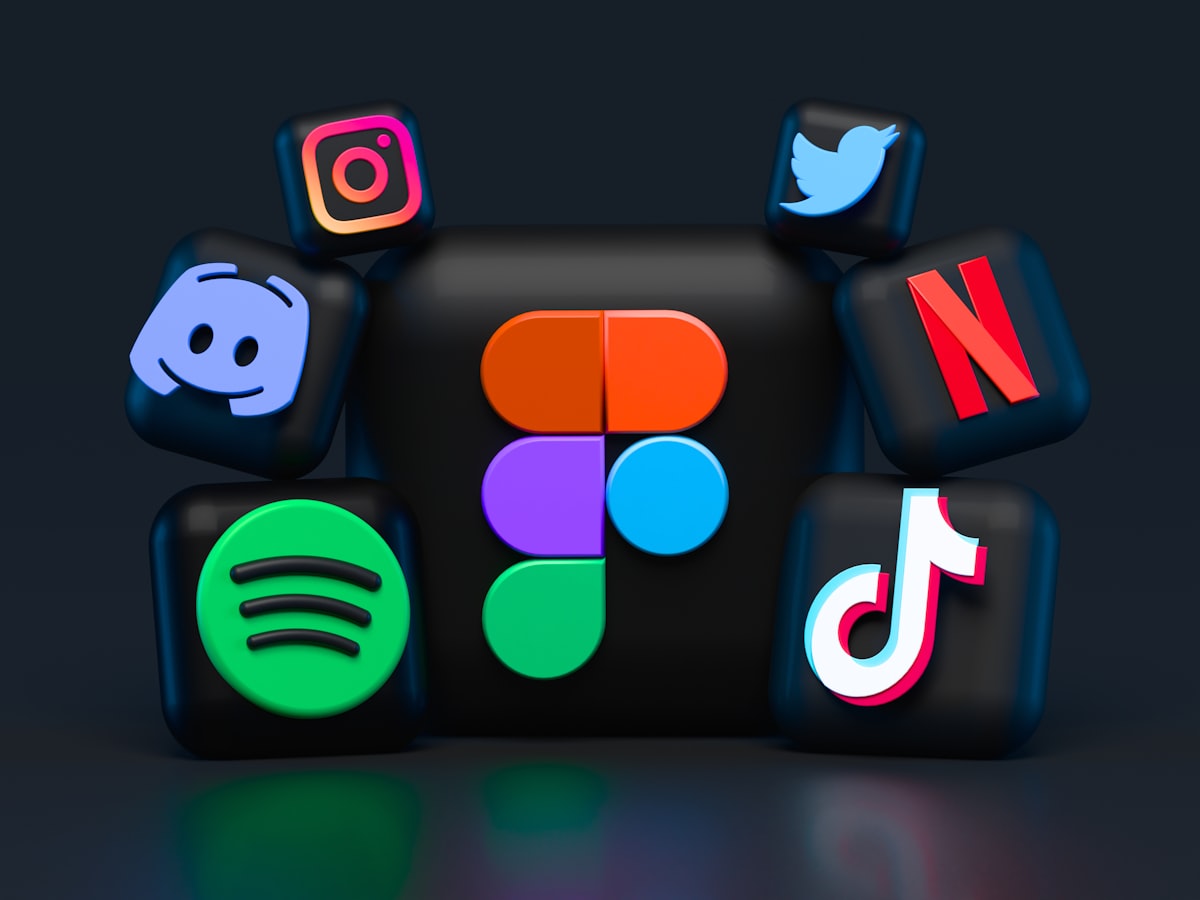
Digital marketing spans every screen, platform, and device your audience uses daily.
4. Content Marketing
Content marketing is the strategic creation and distribution of valuable, relevant, and consistent content to attract and retain a clearly defined audience — and ultimately drive profitable customer action. Blog posts, podcasts, video series, infographics, eBooks, webinars, and case studies all fall under this category. Great content marketing educates and entertains while subtly guiding customers along their buying journey.
5. Email Marketing
Despite being one of the oldest digital marketing channels, email marketing consistently delivers the highest return on investment across the entire marketing landscape. With a global user base of over 4.3 billion email users, a well-crafted email campaign can nurture leads, recover abandoned carts, onboard new customers, and drive repeat purchases — all on autopilot.
6. Influencer & Affiliate Marketing
Influencer marketing harnesses the trust and reach of social media personalities to promote products and services to their engaged audiences. Affiliate marketing, meanwhile, is a performance-based model where partners earn a commission for every sale or lead they generate. Both models turn third-party voices into powerful marketing assets.
The Powerful Advantages of Digital Marketing
Digital marketing has democratized the playing field in ways that were unimaginable just two decades ago. Here is a comprehensive look at why millions of businesses have shifted their marketing budgets online.
Laser-Precise Targeting
Digital platforms allow you to target audiences by age, gender, location, income, interests, online behavior, purchase history, and even life events. A retirement planning firm can target only users aged 45–65 who have shown interest in financial planning. This granularity is impossible in traditional media.
Cost-Effective for All Budgets
You can launch a Facebook ad campaign with as little as $5 per day. A well-optimized blog post can generate organic traffic for years without ongoing spend. Digital marketing offers extraordinary ROI — especially for small and medium businesses that cannot afford TV spots or magazine spreads.
Real-Time Measurability
Every click, impression, conversion, open rate, bounce rate, and cost-per-acquisition is tracked and reported in real time. This allows marketers to make data-driven decisions, kill underperforming campaigns instantly, and double down on what works — eliminating guesswork entirely.
Global Reach, Local Precision
A single digital campaign can reach audiences in over 190 countries simultaneously. Yet that same campaign can be hyper-localized to show different messages to users in different cities, neighborhoods, or even within a specific radius of a physical store location.
Two-Way Customer Interaction
Social media, live chat, comment sections, and email replies transform marketing from a monologue into a dialogue. Brands that engage meaningfully with their audience build trust, loyalty, and community — turning customers into brand advocates who amplify your message for free.
Speed and Agility
A digital campaign can go live within minutes of creation. If market conditions change, a competitor launches a new product, or a trend emerges, you can update your ads, emails, and content in real time — something absolutely impossible with a billboard or a TV spot already in production.
Automation at Scale
Marketing automation tools allow businesses to send the right message to the right person at the right time — automatically. Welcome sequences, abandoned cart reminders, birthday offers, and re-engagement campaigns can all run 24/7 without human intervention, multiplying your marketing output without multiplying your costs.
Scalability Without Ceiling
Digital marketing scales as your business grows. The same email marketing tool that handles 500 subscribers can handle 5 million. The same Google Ads account that spends $100/month can scale to $100,000/month with proportional returns — a luxury traditional channels simply cannot offer.

Real-time analytics give digital marketers an unprecedented view into campaign performance and customer behavior.
Personalization: The Game-Changer
One of the most revolutionary advantages of digital marketing is the ability to deliver hyper-personalized experiences at scale. Modern marketing platforms use machine learning and AI to analyze behavioral data and serve each user content, ads, and offers that are uniquely relevant to them. Amazon's product recommendation engine — responsible for 35% of its total revenue — is a masterclass in personalization at its finest.
Personalized email subject lines generate 26% higher open rates. Personalized calls-to-action convert 202% better than generic ones. In a world of information overload, personalization is the antidote — and digital marketing is the only channel that makes it possible at scale.
Key Insight: Businesses that leverage advanced digital marketing personalization generate 40% more revenue than their competitors who rely on generic, mass-market messaging. The data advantage is simply too significant to ignore in today's competitive landscape.
The Real Disadvantages of Digital Marketing
No marketing strategy is perfect. While the advantages of digital marketing are compelling, a balanced assessment must acknowledge the genuine challenges that come with it — challenges that can derail campaigns and drain budgets if not managed thoughtfully.
Privacy Concerns & Data Regulations
GDPR in Europe, CCPA in California, and a growing patchwork of global privacy laws have fundamentally changed how businesses can collect, store, and use customer data. Violations can result in fines of up to €20 million or 4% of global annual turnover — making compliance a non-negotiable priority.
Extreme Competition
The low barrier to entry that makes digital marketing accessible also floods every channel with competitors. Popular keywords in Google Ads can cost $50–$200+ per click. Organic social media reach has plummeted as platforms prioritize paid content. Standing out in a crowded digital landscape demands creativity, consistency, and often substantial investment.
Steep Learning Curve
Digital marketing encompasses dozens of platforms, tools, and disciplines that each require specialized expertise. Mastering Google Analytics, running profitable Facebook ads, understanding technical SEO, and writing high-converting email copy are distinct skill sets that take years to develop — and the landscape changes constantly.
Digital Fatigue and Ad Blindness
The average person sees between 6,000–10,000 ads per day across digital channels. As a result, consumers have become remarkably adept at tuning out advertising. Ad blockers are used by over 763 million devices globally. Capturing genuine attention in this environment requires increasingly creative and authentic approaches.
Rapid Platform Changes
Algorithm changes on Google, Facebook, or Instagram can overnight devastate a strategy that took months to build. When Google rolled out its Helpful Content Update in 2022 and 2023, thousands of websites saw traffic drops of 60–80% overnight. Platform dependency is a real and ever-present risk in digital marketing.
Reputation Risk and Public Scrutiny
Digital marketing operates in public. A poorly worded tweet, an insensitive ad, or a negative customer experience shared online can go viral for all the wrong reasons. The same two-way communication that builds communities can also amplify criticism at terrifying speed — brands must be prepared with strong crisis communication protocols.
Technology Dependency
Your entire digital marketing operation depends on servers, software platforms, internet connectivity, and third-party tools all working correctly. Website downtime, email deliverability issues, platform outages (remember the Facebook-Instagram-WhatsApp blackout of 2021?), and software bugs can disrupt campaigns at critical moments.
Results Can Take Time
While PPC offers rapid results, organic channels like SEO and content marketing require significant time investment before delivering meaningful returns. A new website typically takes 6–12 months of consistent SEO work before ranking competitively for targeted keywords. Patience and long-term thinking are essential mindsets for sustainable digital marketing success.

The competitive digital landscape demands constant innovation, adaptation, and strategic thinking from marketers.
Digital Marketing vs. Traditional Marketing: A Balanced View
Understanding digital marketing's advantages and disadvantages is most meaningful when contrasted with the traditional marketing approach it has increasingly supplanted. Traditional marketing — television, radio, print, direct mail, and outdoor advertising — is not dead, but it has been relegated to a supporting role for most businesses.
Traditional marketing excels at mass-market brand awareness, reaching older demographics who are less digitally engaged, and creating memorable emotional impact through television storytelling. However, it struggles with measurability, cost efficiency, targeting precision, and interactivity — all areas where digital marketing shines.
The most sophisticated brands today operate an integrated marketing approach — using digital channels for their targeting precision and measurability while leveraging traditional media for broad reach and brand-building. The CMOs of companies like Nike, Apple, and Coca-Cola understand that these are not competing strategies but complementary ones.
The Future is Integrated: Rather than asking "should we use digital or traditional marketing," the smarter question is: "How do we orchestrate digital and traditional channels to create a seamless customer experience at every touchpoint?" That is the hallmark of a truly modern marketing strategy.
Who Should Use Digital Marketing?
The short answer: virtually every business operating in the 21st century. Whether you run a neighborhood restaurant, a B2B SaaS company, an e-commerce store, a nonprofit organization, or a personal brand — digital marketing has something valuable to offer you. The specific mix of channels will differ dramatically based on your audience, budget, goals, and industry, but the underlying digital marketing ecosystem has tools and tactics for every scenario.
Small businesses with modest budgets can focus on SEO, social media marketing, and email marketing — three channels that deliver excellent returns without requiring massive ad spend. Larger enterprises can invest in sophisticated omnichannel campaigns, marketing automation, AI-driven personalization, and programmatic advertising to dominate their markets.
Conclusion: Embracing Digital Marketing with Eyes Wide Open
Digital marketing is not a silver bullet — no marketing approach is. It is a powerful, dynamic, and occasionally complex ecosystem of tools, channels, and strategies that, when wielded skillfully, can transform a business's growth trajectory. Its advantages — targeting precision, measurability, scalability, cost efficiency, and global reach — are genuinely revolutionary. Its disadvantages — competition, platform dependency, privacy complexity, and the speed of change — are real challenges that require strategic thinking and constant adaptation.
The businesses that thrive in the digital era are not those who blindly adopt every new platform or trend, but those who develop a deep understanding of their audience, build a coherent digital strategy aligned with business objectives, and execute with both creativity and analytical rigor. Digital marketing, done right, is not an expense — it is the most measurable, scalable, and efficient investment a modern business can make.